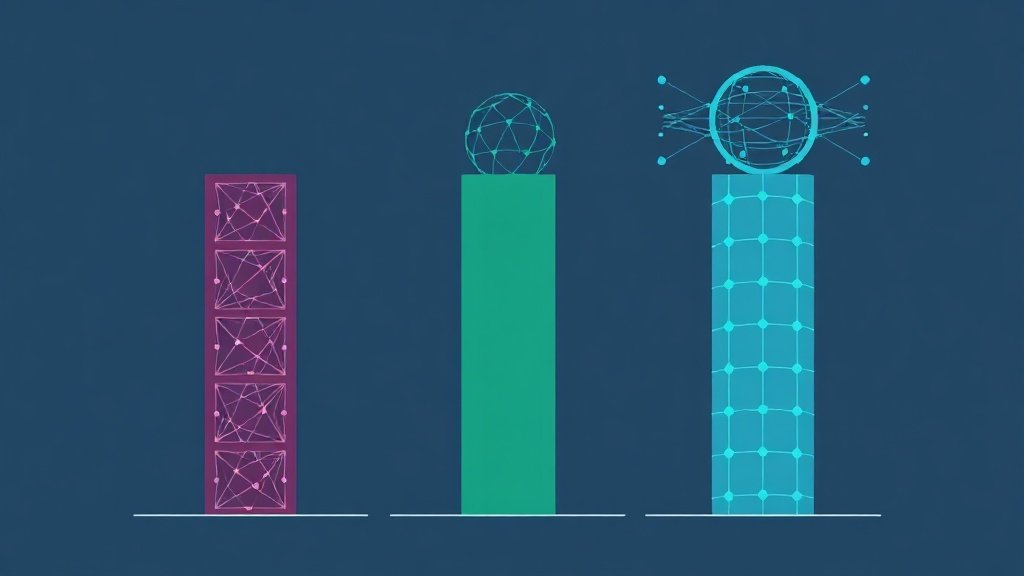
The entertainment industry stands at the precipice of a transformative era, where the boundaries between linear content, interactive experiences, and immersive worlds are rapidly dissolving. This evolution is not merely a creative shift but is fundamentally powered by a sophisticated and increasingly intertwined set of supply chains across cloud infrastructure, graphics processing units (GPUs), and artificial intelligence (AI). Understanding these foundational layers is critical for anticipating the strategic imperatives and economic shifts within the next phase of streaming and interactive media.
At the base of this technological pyramid lies **cloud infrastructure**. Hyperscale data centers, operated by giants like Amazon Web Services, Microsoft Azure, Google Cloud Platform, and Oracle Cloud Infrastructure, serve as the global nervous system. Their supply chain encompasses everything from server racks, high-performance networking equipment (switches, routers), and optical fiber, to power management units, cooling systems, and real estate. These cloud environments provide the unparalleled scalability and global distribution necessary for content delivery networks (CDNs), vast content libraries, and the backend processing required for real-time interactive applications. As media trends towards volumetric video, spatial computing, and personalized experiences, the geographical proximity of cloud resources (edge computing) becomes paramount, demanding continuous investment in a globally distributed and low-latency network infrastructure.
Interwoven with cloud is the critical **GPU supply chain**, the computational engine of modern AI and real-time graphics. The dominance of NVIDIA, alongside AMD and Intel, underscores the strategic importance of these specialized processors. The manufacturing process for advanced GPUs is incredibly complex and capital-intensive, centered around leading-edge semiconductor foundries, primarily TSMC. Bottlenecks often arise not just from chip fabrication, but also from advanced packaging techniques like TSMC’s CoWoS (Chip-on-Wafer-on-Substrate) and the supply of High Bandwidth Memory (HBM) from manufacturers such as Samsung and SK Hynix. This intricate web of specialized component suppliers and manufacturing processes means that lead times for high-end GPUs can extend for months, creating significant constraints on cloud providers’ ability to expand their AI compute capacity. For streaming and interactive media, GPUs are indispensable for rendering high-fidelity graphics in cloud gaming, processing complex virtual environments for spatial computing, and accelerating the training and inference of sophisticated AI models.
The third, and increasingly defining, pillar is the **AI supply chain**. This is multi-faceted, encompassing not only the underlying GPU hardware but also the vast datasets, proprietary and open-source foundation models (e.g., OpenAI’s GPT, Google’s Gemini, Meta’s Llama), development frameworks, and specialized talent required to build and deploy intelligent systems. The supply of high-quality, ethically sourced, and sufficiently diverse data is a perpetual challenge, as is the continuous innovation in model architectures and training methodologies. Cloud providers are increasingly offering “Model-as-a-Service,” democratizing access to powerful AI capabilities. In media, AI is transformative: it drives hyper-personalization for content recommendations, generates virtual environments and digital characters, enables real-time content upscaling and super-resolution (e.g., DLSS/FSR equivalents for streaming), and facilitates dynamic, adaptive narratives in interactive entertainment. This layer significantly impacts content creation workflows, distribution efficiency, and the consumer’s ability to engage with media in entirely new ways.
The convergence of these three supply chains creates a formidable technological stack. Cloud provides the scalable platform; GPUs furnish the raw processing power for both rendering and AI; and AI layers intelligence onto every aspect from content creation to consumption. Bottlenecks in any one area—be it a shortage of advanced HBM memory affecting GPU availability, a scarcity of skilled AI engineers, or delays in hyperscale data center construction—can ripple across the entire ecosystem, impacting the pace of innovation and deployment for next-generation media experiences. The capital intensity and strategic importance of these supply chains are driving unprecedented investments and geopolitical considerations, shaping the competitive landscape for tech giants and media companies alike as they vie to control the foundational elements of future entertainment.