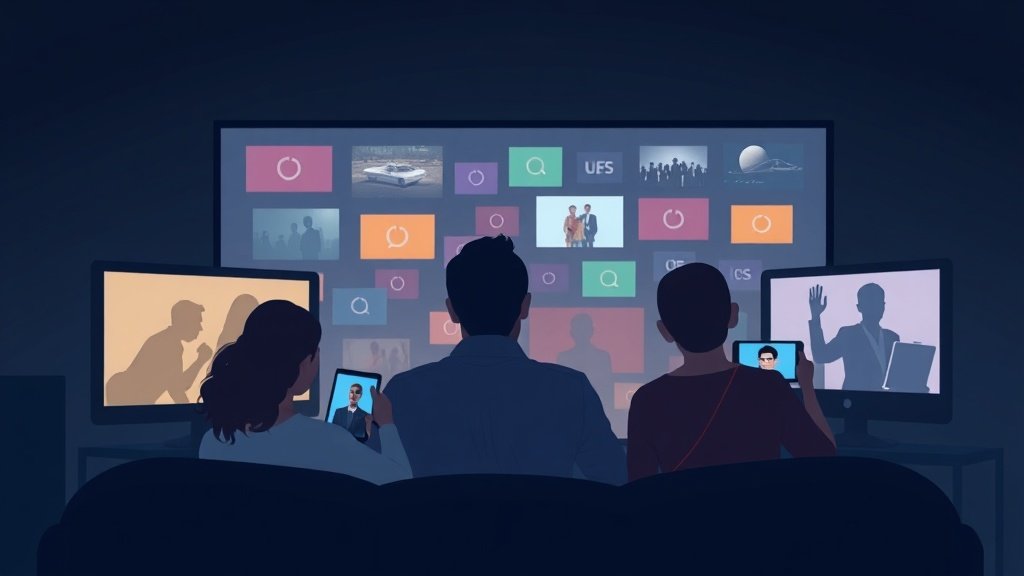
Digital entertainment often feels like a content game. It is. But behind every hit show, three invisible engines churn: distribution, infrastructure, and advertising. These are the unsung heroes, or villains, of your monthly bill. They decide who wins the attention war.
Understanding these layers reveals the true business. Content gets the headlines. These foundations dictate profitability, reach, and even how long a subscriber stays. Neglect them, and even the best content struggles.
**Distribution: The Access Game**
Getting content to eyeballs used to mean cable. Now, it means apps. Direct-to-consumer (DTC) was the first wave, with everyone building their own walled garden. That created a problem: too many apps, too much friction.
Today, aggregation is the smart play. Smart TV operating systems, telecom bundles, and super-aggregators like Amazon Channels or Roku become crucial gatekeepers. They offer reach. But they also demand a slice of the pie, often owning the customer relationship. A streamer gains audience but risks becoming a commodity. Without a strong brand or unique IP, the independent app struggles for discovery against these giants.
**Infrastructure: The Invisible Pipes**
You can’t stream what isn’t delivered reliably. This is the realm of cloud services, content delivery networks (CDNs), and streaming protocols. It’s the “how” of high-quality video, whether 4K HDR or a live sporting event. Latency matters. Buffering kills engagement.
Investing in robust infrastructure reduces operational costs and boosts viewer satisfaction. Netflix, with its Open Connect CDN, famously built its own highway. Others lean on AWS, Google Cloud, or Azure. For live sports or cloud gaming, low latency is non-negotiable. Quality problems quickly lead to churn. Services with high operational costs simply can’t compete on price.
**Advertising: The New Gold Rush**
Subscription fatigue is real. AVOD, or ad-supported video on demand, offers a lifeline. It provides a lower-cost entry point for consumers and a new revenue stream for streamers. FAST channels — free ad-supported streaming TV — multiply this effect, offering a lean-back experience reminiscent of linear TV, but with better targeting.
Ad revenue growth for services like Disney+ Basic and Netflix’s ad tier shows the market’s hunger. Billions in ad dollars are shifting from traditional linear TV. This isn’t just about showing ads; it’s about data. Programmatic advertising and precise audience targeting make these ad slots more valuable. For pure SVOD models struggling to grow average revenue per user (ARPU), AVOD is no longer an option. It’s a necessity.
**Consumer Attention Economics: The Ultimate Battleground**
Everyone wants your attention. And your time is finite. The streaming wars aren’t just against other streamers. They’re against YouTube, TikTok, and gaming apps. Every minute spent on Fortnite or short-form video is a minute not spent watching your new series.
Churn rates are the brutal truth here. Consumers hop between services, chasing new content or better deals. Platforms that offer diverse content, integrate gaming, or master short-form engagement tend to be “stickier.” Think of Amazon Prime’s bundle, making Prime Video just one perk. Single-focus streamers face an uphill battle. They must deliver unparalleled value to hold onto those precious minutes and eyeballs.
The streaming wars aren’t just about content budgets. They are about smart infrastructure, clever distribution, diverse monetization, and a relentless fight for every eyeball. Watch these engines. They power the future.