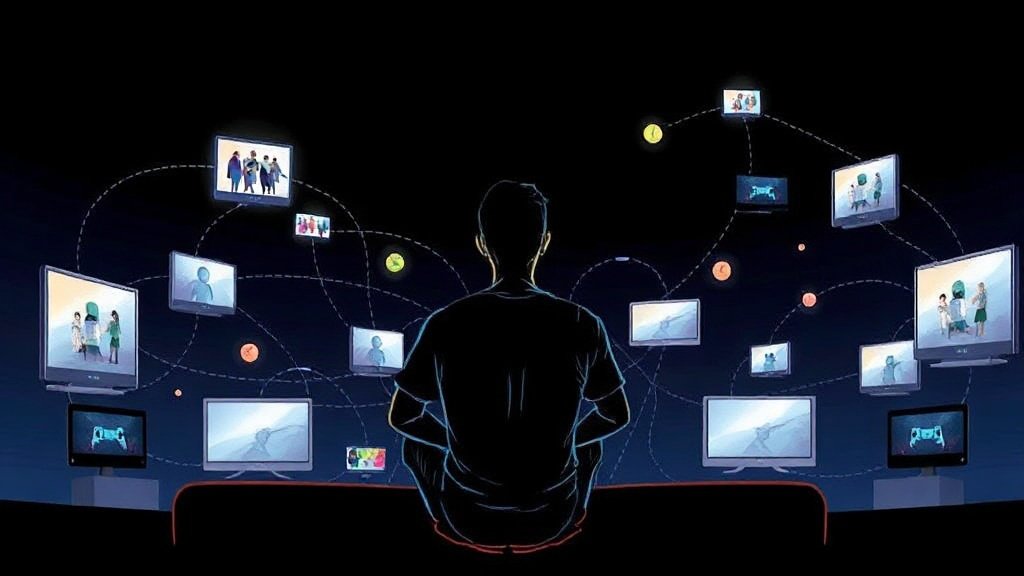
The streaming wars dominate headlines. We talk about subscriber counts, hit shows, and blockbuster budgets. But the real game is played deeper. It’s about the hidden plumbing, the smart advertising, and the brutal fight for your time.
Content is king, they say. Maybe. But distribution is the kingdom. Infrastructure is the castle walls. And consumer attention? That’s the crown jewel, increasingly elusive.
Getting a show from a server to your screen seems simple. It isn’t. Global content delivery networks, or CDNs, form the internet’s express lanes. They cache content closer to you, reducing lag and buffering.
This network isn’t cheap. Each gigabyte streamed has a cost. Companies with their own data centers or strong ISP relationships gain an edge. Think of Amazon Prime’s seamless integration, leveraging AWS infrastructure. Or Jio’s bundled offering in India, which smooths the last mile for its subscribers and partners like JioCinema.
Those without such scale pay retail for bandwidth. This eats into margins, especially when global viewership spikes. A sudden hit show can be a financial strain if distribution isn’t optimized.
Beyond distribution, the very backbone of streaming relies on vast computing power. We’re talking cloud services for transcoding video into myriad formats, robust security, and dynamic scaling for millions of simultaneous users. This is where AWS, Google Cloud, and Azure quietly run the show for most streamers.
High-quality streaming, like 4K HDR, demands immense processing power. Maintaining uptime and low latency for a global audience is a relentless technical challenge. These infrastructure costs are fixed and substantial, a barrier to entry for new players, and a constant expense for incumbents.
Subscriber growth is slowing for many. So, attention turns to advertising. Hybrid AVOD/SVOD models, like Netflix’s ad-supported tier or Disney+ Basic, are not just about more options. They are about boosting Average Revenue Per User (ARPU).
Ad revenue per subscriber often exceeds what a pure SVOD tier can bring in. Why? Because marketers pay a premium for targeted audiences. Platforms with rich first-party data on user habits win big here. They can offer granular targeting that broadcast TV never could dream of.
YouTube pioneered this model, capturing billions in ad revenue. Now, major streamers want a piece. The challenge is balancing ad load with viewer experience. Too many ads, or poorly targeted ones, lead to churn. Too few, and revenue falters. It’s a delicate dance.
This is the ultimate prize, and it’s shrinking relative to supply. Viewers are overwhelmed. It’s not just Netflix versus Disney anymore. It’s also YouTube, TikTok, Instagram Reels, and gaming platforms like Fortnite or Roblox. Even regional players like Aha and SunNXT fight for local eyeballs with hyper-specific content.
Gaming, in particular, is a time sink. Top gaming apps report hundreds of millions of daily active users, often with higher engagement hours than streaming video. Cloud gaming could blur the lines further, making “play” and “watch” even more interchangeable activities.
Churn is the clearest signal of this attention war. Users jump services freely, canceling subscriptions for a month to binge a show, then moving on. Loyalty is rare. Platforms must offer more than just video. They need to become essential, whether through live events, community features, or integrating other forms of entertainment.
The streaming business is far more complex than just making good shows. It’s a capital-intensive game of infrastructure, a data-driven battle for ad dollars, and an endless struggle for finite attention. The winners won’t just have the best content. They’ll own the pipes, optimize the ads, and figure out how to be indispensable in a crowded digital world. Keep an eye on these quiet forces. They determine who truly profits.