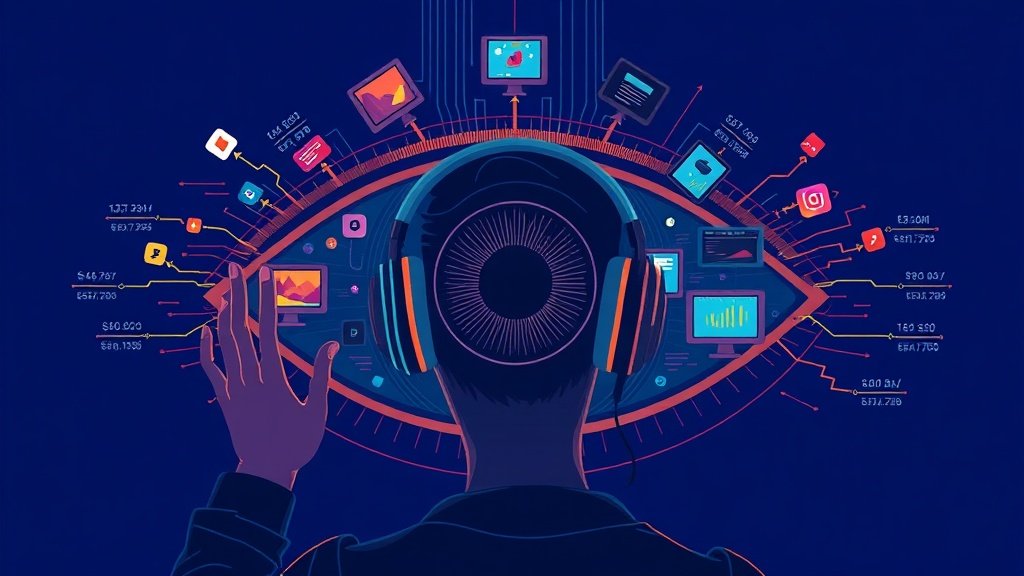
Forget “content is king.” Today, attention is god, and distribution is its prophet. The real fight isn’t just for great shows, it’s for the last six inches: the space between a viewer’s eyes and their screen, and the sliver of time they have left. Every platform, every game, every short video app wants that piece.
This is a business built on thin margins and fickle eyeballs. To win, companies must master not just creation, but the pipes that deliver, the ads that pay, and the psychological levers that keep users glued. It’s a brutal, complex ecosystem where infrastructure becomes strategy and ad revenue becomes a lifeline.
Distribution is the first hurdle. Owning the platform means owning the customer. Smart TV operating systems like Roku, Samsung, and LG are the new gatekeepers, sitting between content creators and consumers. They dictate visibility, app placement, and even revenue splits. On mobile, the app stores hold similar power. Success often hinges on strategic partnerships, like JioHotstar’s massive reach in India via telecom bundles, rather than purely organic discovery.
Underneath it all, infrastructure is the invisible hand. Fast, reliable streaming isn’t magic; it’s a colossal network of cloud servers and content delivery networks (CDNs). AWS, Azure, and Google Cloud underpin most major streamers. CDNs like Akamai push video closer to viewers, slashing latency. Poor infrastructure means buffering, pixelated video, and ultimately, churn. Users expect instant, flawless playback. They do not care how hard you worked for it.
Advertising is no longer an option; it’s a core revenue pillar. SVOD-only models struggle with subscriber acquisition and retention costs. AVOD and hybrid models are growing. Netflix and Disney+ both launched ad tiers, chasing YouTube’s programmatic ad success. Connected TV (CTV) is now a premium ad environment, offering better targeting and measurement than linear TV ever did. This shifts ARPU upwards, often bringing in price-sensitive users who wouldn’t pay full price for SVOD.
But the fiercest battle is for consumer attention. This is a zero-sum game. Every minute spent watching *Squid Game* is a minute not playing *Fortnite* or scrolling TikTok. Gaming platforms now command significant MAU/DAU numbers and revenue. Mobile gaming, in particular, often rivals or surpasses streaming apps for daily engagement. Short-form video apps, with their endless scroll and algorithmic dopamine hits, are particularly adept at hoarding time.
To compete, many streamers double down on hyper-local content. Aha and SunNXT saw success focusing on specific regional languages in India, fostering deep loyalty that broader services often miss. This strategy counters the global competition by appealing directly to cultural nuances and linguistic preferences. It’s harder for a global player to replicate that specific connection.
The digital entertainment landscape is a constant war for pixels and pocketbooks. Companies that adapt, building strong distribution, robust infrastructure, diverse ad revenue streams, and content that captures specific attention pockets, will thrive. Those that don’t? They will simply become background noise in an already very loud room.