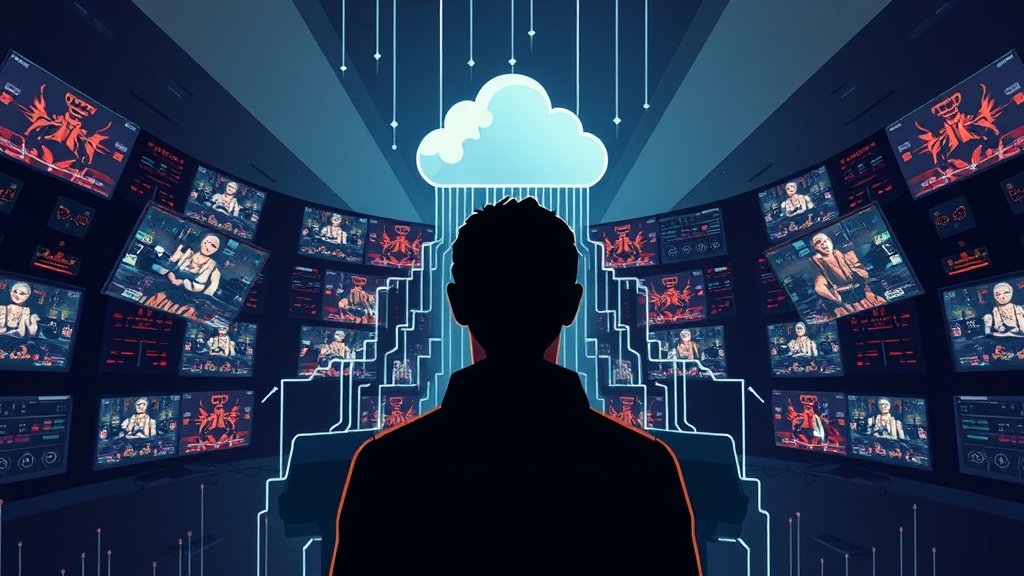
Cloud, GPUs, and AI are the new bedrock of digital entertainment. They dictate what content gets made, how it reaches you, and what you pay. This isn’t futuristic fantasy. It’s the practical supply chain for every stream, every game, every interactive experience you touch.
Think of cloud computing as the world’s biggest server farm. Streamers use it to store libraries, handle peak traffic, and deliver video globally. This cuts massive upfront capital expenditures. It also enables instant global scale. Disney+ launched globally, hitting 10 million subscribers in a single day. That’s a cloud feat. However, it’s also an ongoing operational expense. If you’re not efficient, your cloud bill can eat into your ARPU.
Graphics Processing Units (GPUs) are the workhorses. They render game worlds, power virtual reality, and encode video efficiently. Increasingly, they are the muscle behind AI. Every recommendation engine, every generative AI tool creating early-stage scripts or visuals, runs on GPUs. Demand from AI companies now competes directly with game developers and even data centers needing them for high-end rendering. NVIDIA is having a moment, to put it mildly.
Artificial Intelligence is the brain. It personalizes your feed, suggesting shows you actually want to watch. Better recommendations mean less churn and higher engagement. AI also speeds content creation. Imagine AI-assisted scriptwriting, or generating complex visual effects elements. This lowers production costs, enabling more creative risks. It could even power more responsive, dynamic storytelling in interactive media.
These three aren’t separate. They form a powerful trinity. Cloud gaming platforms, like Xbox Game Pass Cloud Gaming or NVIDIA GeForce Now, rely on cloud infrastructure and powerful GPUs to stream full games to basic devices. Generative AI tools, churning out text or images, live in the cloud and demand massive GPU power. VR/AR experiences need both high-end graphics and cloud distribution to reach a wider audience.
The race for compute resources intensifies. Who controls the best cloud infrastructure, the most advanced GPUs, and the smartest AI algorithms will define the next entertainment titans. We will see more custom silicon from big players to optimize their specific needs. We will also see how AI’s role in content creation impacts talent, ownership, and content economics. The back-end operations are now as crucial as the front-end show.